
About Author
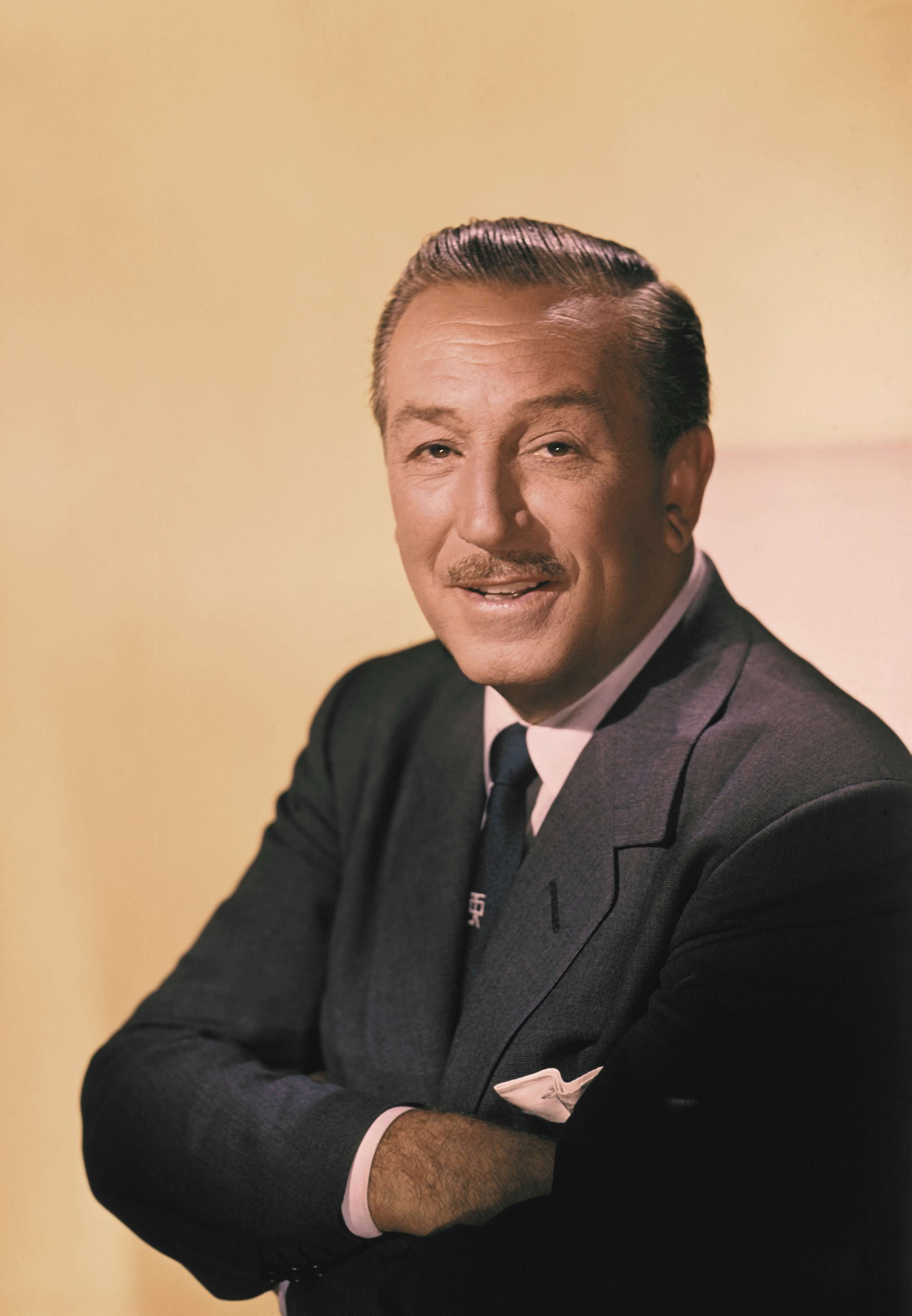
“If you can dream it, you can do it. Always remember that this whole adventure was started by a mouse.”
WALT DISNEY
- Walter Elias Disney was born in Chicago on December 5, 1901, to Elias Disney and Flora Call.
- Passion for Drawing: He grew up on a farm in Marceline, Missouri—a period he would always look back on with deep nostalgia and which would inspire the aesthetics of many of his works (and even the Main Street of his theme parks). From an early age, he showed a great talent for drawing.
- First Jobs: During World War I, he served as a Red Cross ambulance driver in France. Upon his return to the United States, he pursued a career as a commercial illustrator/cartoonist in Kansas City.
2. Early Days in Hollywood and the Birth of Mickey Mouse
- The First Studios: In 1923, he moved to Los Angeles with his brother Roy O. Disney (who would always handle the financial aspects of the company) and founded the Disney Brothers Studio.
- Oswald the Lucky Rabbit: He created his first successful character, but lost the legal rights to distributor Margaret Winkler in 1928.
- The Breakthrough – Mickey Mouse: Having learned a lesson about the importance of owning the rights to his work, Walt created Mickey Mouse that same year (1928).
- Steamboat Willie (1928): It was the first cartoon with synchronized sound to achieve overwhelming success. Walt himself voiced Mickey Mouse for many years.
3. The Golden Age of Animation
Walt Disney was not content with short films and constantly pushed the boundaries of technological and artistic innovation:
- Silly Symphonies: A series of shorts in which he experimented with advanced color processes (three-strip Technicolor) with Flowers and Trees (1932, the first Oscar winner) and the depth of field effect using the multiplane camera.
- The First Feature Film (1937): Defying industry skepticism (which labeled the project “Disney’s Folly”), he produced Snow White and the Seven Dwarfs. It became an unprecedented global success that revolutionized cinema history.
- Subsequent Masterpieces: In the 1940s, masterpieces such as Pinocchio, Fantasia, Dumbo, and Bambi followed.
4. Expansion: Television and Disneyland
- Documentaries and Live-Action: In the 1950s, Disney expanded into live-action films (Treasure Island, Mary Poppins) and nature documentaries (True-Life Adventures).
- Television: He was among the first movie producers to recognize the power of TV, creating iconic shows such as The Mickey Mouse Club and Disneyland.
- Disneyland (1955): On July 17, 1955, he opened the world’s first modern theme park in Anaheim, California: Disneyland. The park redefined family entertainment.
5. Later Years and Legacy
- EPCOT and Walt Disney World: In his final years, Walt worked on the project for a second park in Florida and the vision of EPCOT (Experimental Prototype Community of Tomorrow), a concept for a human-scale city of the future.
- Passing: A heavy smoker, he died of lung cancer on December 15, 1966, at the age of 65, before seeing the completion of Walt Disney World in Orlando.
Key Points of His Cultural Impact
- Technological Innovator: Introduced synchronized sound, full-color animation, the multiplane camera, and audio-animatronics.
- Oscar Record: He still holds the absolute record for the most Academy Awards won (26) out of 59 nominations.
- Narrative Vision: Transformed animation from simple comedic entertainment for children into a true dramatic and musical art form.
